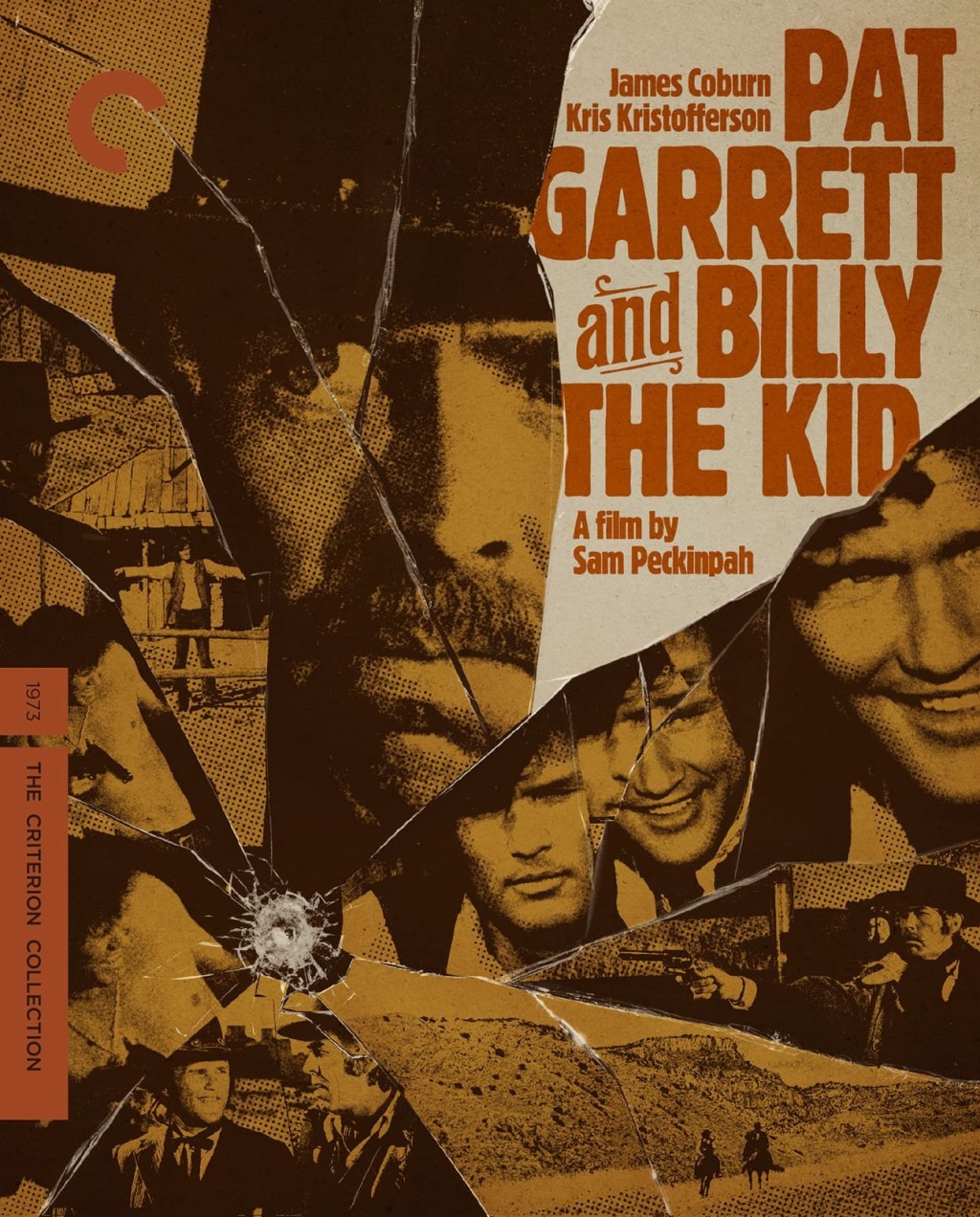
Pat Garrett and Billy the Kid (1973)
Directed by Sam Peckinpah
Spine #1224
Holly: Why don’t you kill him?
Billy: Why?….He’s my friend.
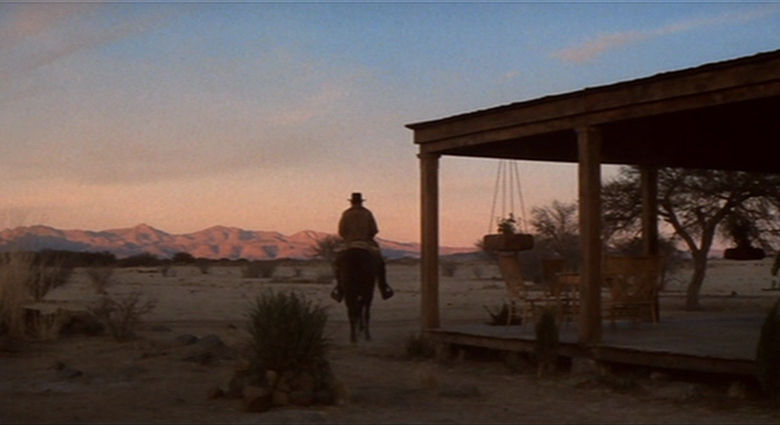
Arid and dry, the Chihuahuan Desert stretches across the American West from Arizona to Texas and down to the Northern Mexican plateau. For centuries this hot expanse of land has been an inhospitable terrain where only the most well adapted could survive. Plants and animals evolved to handle life in the desert with minimal water, humans on the other hand evolved to survive with a loaded gun always at the ready. Set in the reality of this dangerous world, Sam Peckinpah’s Pat Garrett and Billy the Kid showcases the rough and tumble early days of settling the New Mexico territory as some aim to bend it into a respectable state while others try to squeeze the last opportunity to grab all they can without constraint.
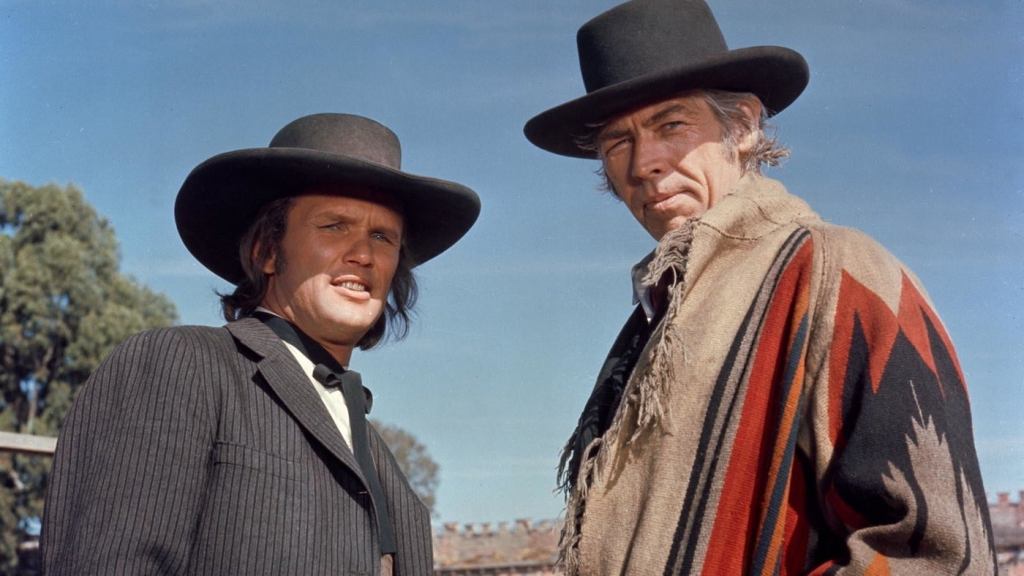
The film centers around a cat and mouse chase of newly minted sheriff Pat Garrett, a cool yet gruff James Coburn, and the irrepressible outlaw Billy the Kid, dynamic yet sensitively played by Kris Kirstofferson, whose history with one another layers a level of veneration between the two old partners despite their respective roles. And though in the traditional sense Pat is the heroic hero trying to reign in the criminal Billy, both characters demonstrate opposite values throughout the course of the film, as Peckinpah continually swaps their white and black hats of the Western to a point both where both characters are wearing grey when the curtain closes, a choice that brings this classic genre into the ambiguity of 70s cinema.
The narrative isn’t the only aspect of the film that contains such modern sensibilities. Pat Garrett and Billy the Kid feels like a modern western due to its non-stop level of indiscriminate violence that seems as never ending as the vast sagebrush of New Mexico. Other than our key leads of Coburn and Kristofferson, every supporting characters is disposable, meeting their maker at any moment no matter their role in the outlaw gang or law posse with a quick bullet to the gut. Adding to this modern demonstration of brutality is a second aspect of 70s culture that bleeds through, adding in the music and face of perhaps the most famous musician in the world at the time, Bob Dylan, whose country rock soundtrack feels like a rebellious act within the traditional template of depicting cowboys on screen.
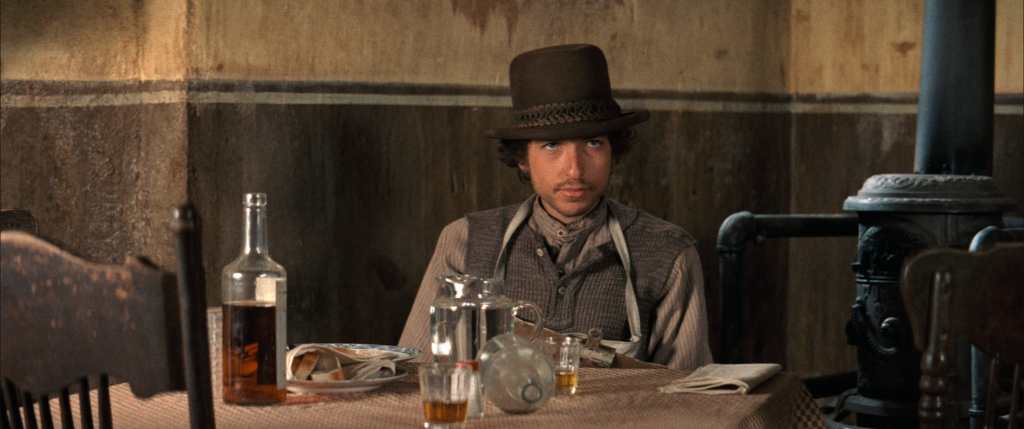
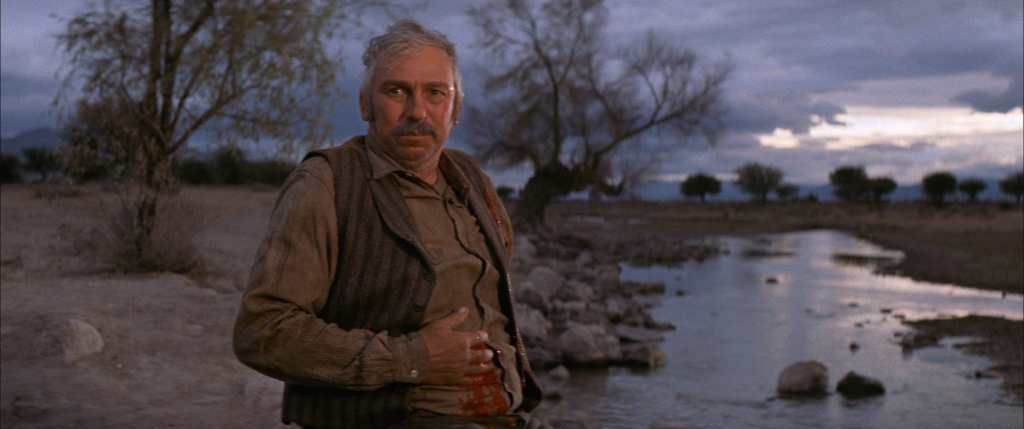
At times rollicking and others touching, Dylan crafted a sound unlike any other the genre had seen to that point, giving the film an stylistic energy and contemporary flavor that other filmmakers would employ in new ways like Tarantino’s use of Rick Ross in Django Unchained. Dylan’s masterpiece “Knockin’ on Heaven’s Door,” written specifically for the film, is deployed as a running death motif. It’s first appearance comes down like a hammer with the heart wrenching yet beautifully shot death of Slim Pickens’s Sheriff Colin Baker, who after receiving a mortal wound slowly marches toward the glimmering sight of a nearby river followed in tow by his tearful wife as the song’s lyrics eloquently match the action seen on screen. The motif is repeated, but only through melody in subsequent killings, reaching its slowest rendition at the film’s conclusion.
Pat Garrett and Billy the Kid does a tremendous job at character development, framing not only the key principles in scenes that highlight their motivation, but picking up the supporting cast in small moments that highlight their true nature. Whether it’s Deputy Sheriff Bob berating Billy with self-righteous gospel redemption as the gallows are being built, and framed on screen, behind Kristofferson or when Harry Dean Staton’s Luke cedes his bed, and woman, back to Billy when he returns to the homestead after his shootout escape. The film is filled with crucial moments the brings to life the entire ensemble and their place within this unlawful world.

As the film reaches it’s final showdown, Peckinpah showcases a masterclass in pacing that leads to the film’s gratifying conclusion. As Dylan’s nervous Alias speaks with Billy the wind-swept desert dust fills the sky above and around Fort Sumner where the entire gang is laying low. Garrett and his crew slowly enter without any of the typical shootout to get to the final boss. So easy is this task that Garrett has a look of disbelief when he opens the hacienda’s picket fence gate, unsure if he’s ready to finish the task at hand. Nobody seems to want to pull the final trigger, but when the shot is at last fired the audience stays in place through the dawning morning to contemplate the conclusion before the final ride out.
Pat Garrett and Billy the Kid is an excellent addition to the Criterion Collection and a must for any enthusiast of the Western genre.
 The Director's Lens
Leave a comment