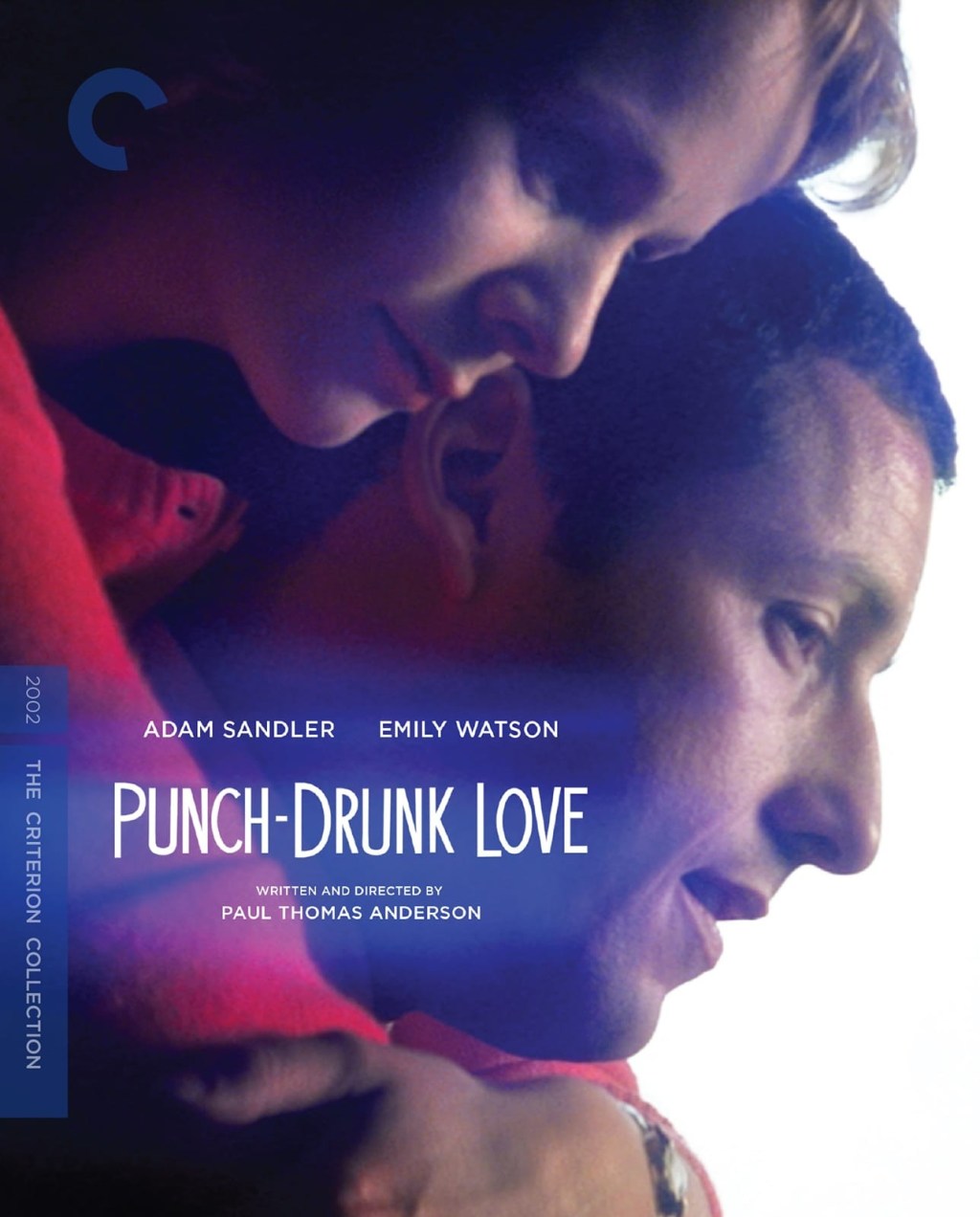
Punch-Drunk Love (2002)
Directed by Paul Thomas Anderson
Spine #843
Quote: “SHUT UP! SHUT THE FUCK UP! Shut up; will you SHUTUP SHUTUP! SHUT SHUT SHUT SHUT SHUTUP… SHUTUP! NOW”
The Hollywood Sign stands tall above the glitzy bright lights of the famous theaters and the hordes of tourists strolling along the Walk of Fame. Yet, beyond the towering white letters, just on the other side of the mountain in which it sits, lies a whole other world. An asphalt grid of cris-crossing roads filled with mini-malls and fast-food joints, studio backlots and warehouses. The San Fernando Valley, or “the Valley” for short, is less a geographic location than it is a state of mind. It is the suburban home of working-class stiffs and wannabee movie stars sweating it out in the heat pocket of LA, brains boiling as their California brethren are given a reprieve from the ocean breeze that is blocked on all sides by a fortress of hills.
Stretching from Topanga to the west and Glendale to the east “the Valley” is often the canvas and setting in which auteur Paul Thomas Anderson captures his unique brand of film. The director catapulted onto the cinema scene after his masterful second film Boogie Nights was released. Boogie Nights took audiences into the world of adult film production and the movers and shakers of that industry who call “the Valley” home. Anderson would also set his third film “Magnolia” here as well, jumping in and out of the apartment complexes, soundstages and store fronts of this massive stretch of interconnected suburbs. Magnolia was filled with a huge cast of characters reflecting the divers population who call this slice of LA home. With his fourth film, Punch-Drunk Love, Anderson would complete a trio of “Valley” tales with a smaller more insular troupe, though no less complex or burdened by the weight of living in the shadow of the Hollywood Hills.
Punch-Drunk Love follows lonely and socially inept entrepreneur Barry Egan on two personal quests. The first, an attempt to exploit a loophole in a food brand marketing promotion that could net him millions of frequent flyer miles for the rest of his life, and second the pursuit of love with Lena, a friend and work colleague of one of Barry’s many sisters. Throwing off both attempt at happiness is a criminal ring of phone sex scammers who blackmail Barry for the little he has at the bequest of a mattress empresario with a rather short temper.
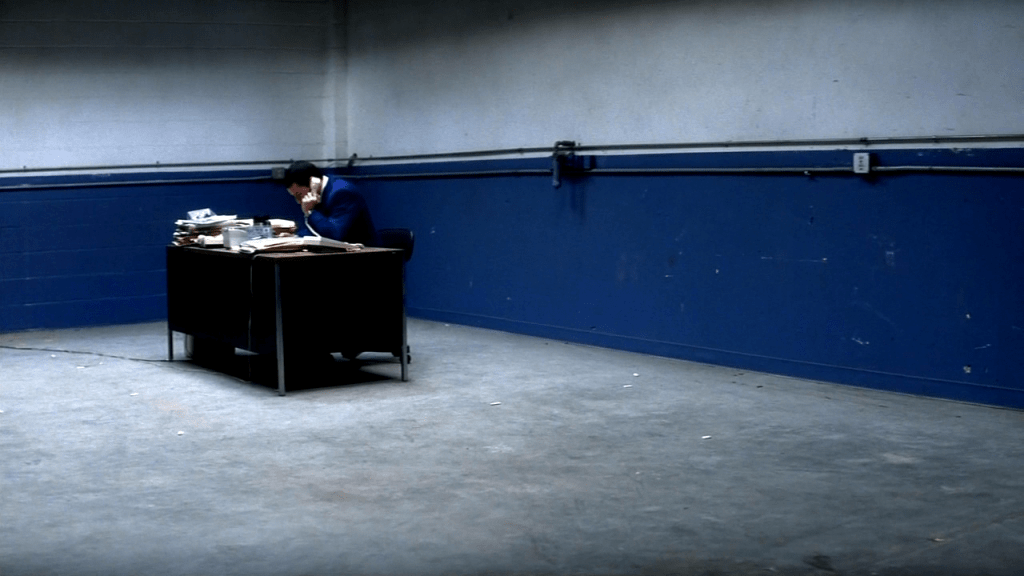
Unlike the pop explosion that kicks off “Boogie Nights” with a swirling one shot that flys both outside neon night clubs before darting onto the disco dance floor, Punch-Drunk Love offers a much more reserved opening. A blue suited Adam Sandler quietly starting his day in a sparse warehouse welcoming the day with his travel mug. Stepping outside to meet the morning sunrise, the quiet pre-dawn streets are violently interrupted when he witnesses a moment of destruction, an inexplicable car wreck and the slamming arrival of a harmonium at the curbside.
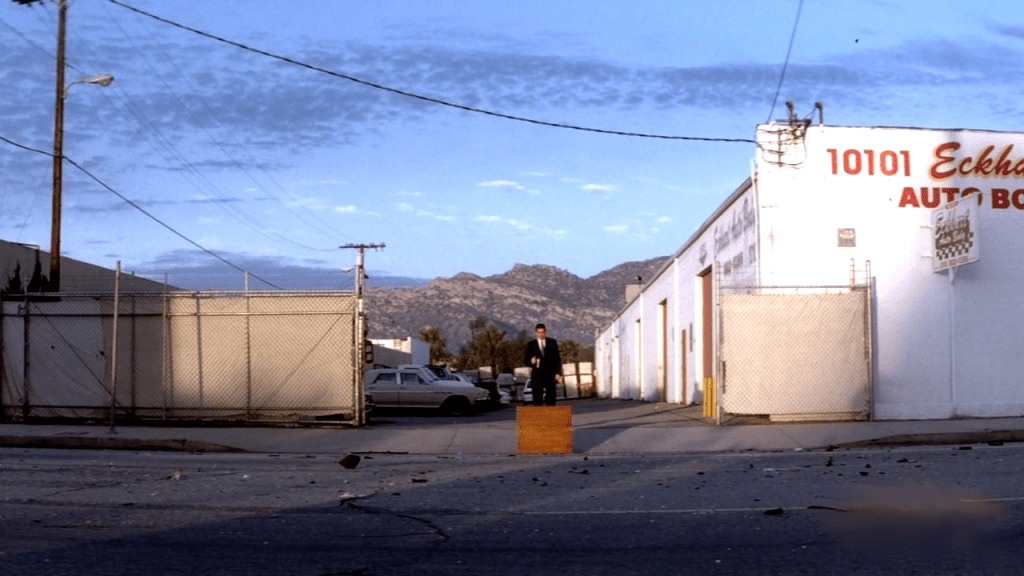
It is a frightening bit of sound production that startles and jolts you out of any comfort level found in the quiet entry moments, which becomes a pattern as the minutes continue to click. The crash of the car, a semi-truck darting through the street after Barry picks up the harmonium, the opening of the auto shop bay door. All combine throughout the first act to throw your senses off familiarity, either in story or our connection to the lead actor so known to this point for his laugh out loud comedy.
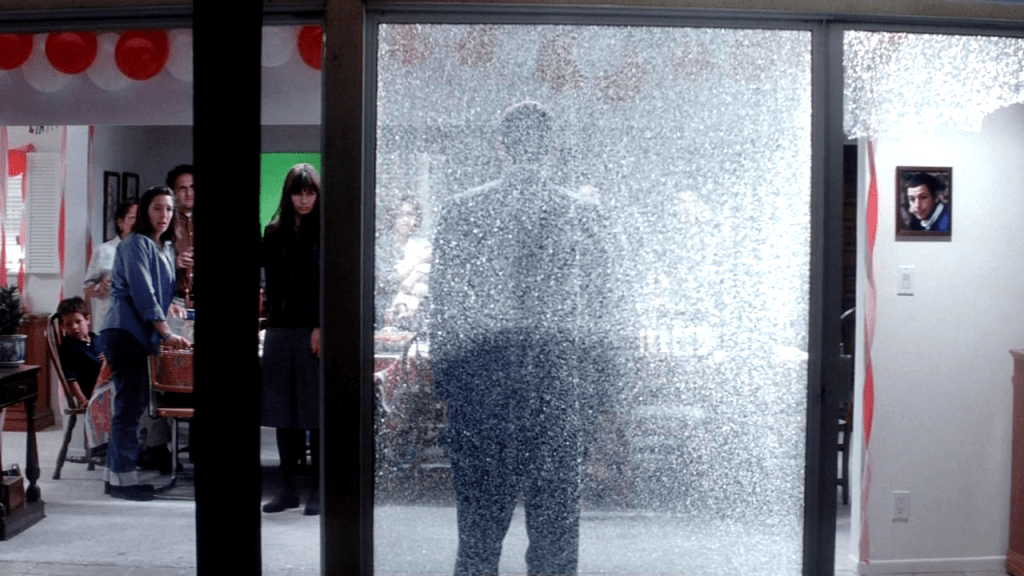
In fact, it’s almost as if PTA uses the various elements of what makes Sandler so funny and inverts them into sadness. As the audience gets to know Barry and understand his anxious energy, it becomes apparent he conjures a mirror image of a typical Sandler SNL skit. The demeaning phone calls from his sisters (“did you just say chat”) and Barry’s go along with-it attitude in a “fuck my life” kind of way would be a running punchline under a different tone, however here it makes you feel so much sympathy for the character. His awkwardness entering the party with his sisters who constantly berate him, and his smashing of the door windows would seem so ridiculous and silly if not for Paul Thomas Anderson’s framing of Sandler which shows the audience how terribly it affects him.
Pacing plays a key role in setting the tone and mood for Punch-Drunk Love. As Act 1 concludes with Barry reluctantly making a call to a phone sex operator, he awakes the next morning with a return call from the same girl and thus beginning a shakedown. The moment Georgia’s tone flips from “hey baby” to “you better listen to me” a fuse is lit, and chaos begins with fast paced musical tension and driving dialogue performed with nervous energy at full tilt.
As with all of PTA’s films, the cinematography is gorgeous. Collaborating for the fourth time with director of photography Robert Elswit whose lens finds the deepest shades of color, specifically blue, you will ever see in cinema. Whether its Barry’s iconic suit or the shades of night passing across the faces of Barry and Lena driving back from their first date, color plays a core aspect of the success of the film. Punch-Drunk Love is dominated by black and white tones with the only reoccurring colors being blue and red. It is with these colors that our main characters are identified – Barry in blue and Lena in red. The blending of the costumes in their connections with one another along with the digital art from Jeremy Blake interspersed throughout establishes the connection between them.

Elswit would go on to photograph PTA’s next two films There Will Be Blood and The Master, stories that would depart from his familiar Valley with retrospective views of America’s past. However, Anderson wouldn’t be able to leave for long, returning with Licorice Pizza a coming of age tale that highlights the highs and lows of growing up in such a specifically enchanting place.
 The Director's Lens
Leave a comment