It’s been a minute since I’ve dived into my self-created syllabus of film study, so why not return with an oddball entry of 2025 with Osgood Perkins adaptation of the Stephen King short story, The Monkey.
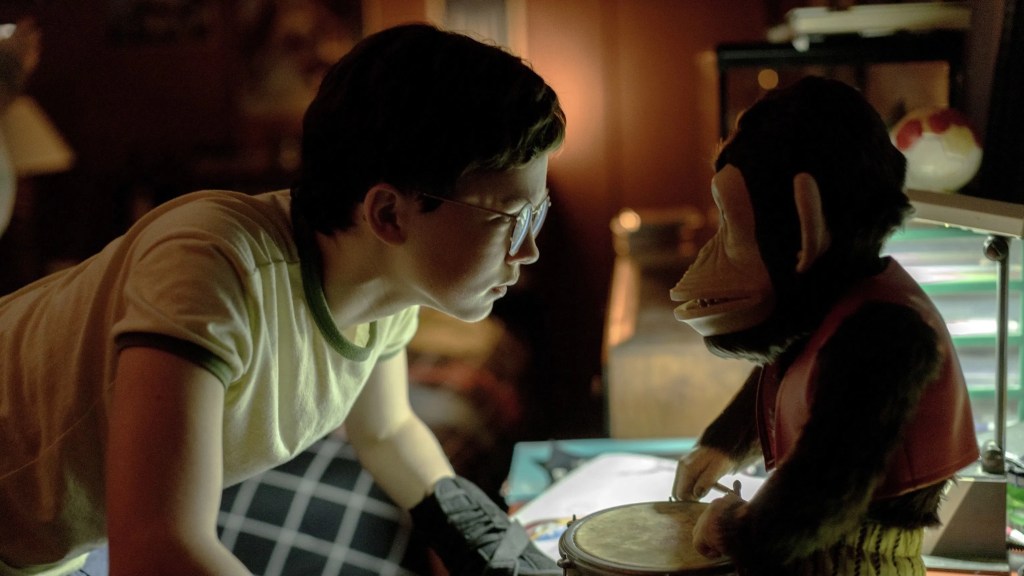
On the docket this week I’m looking at film structure, specifically narrative. According to my copy of “A Short Guide to Writing About Film,” a narrative can be divided into two different components. First the story, which is all the events that are presented to us that we can infer have happened. Second is the plot, the arrangement or construction of those events in certain order or structure. Now, if I am being honest, when viewing a film there is no other component more important to me than the story. You can have the best acting in the world, the most captivating cinematography ever put on celluloid or the highest caliber of special effects the world has ever seen, but if you don’t have a compelling narrative that draws me in with humor, substance or emotional appeal than frankly you just have pretty people and pictures moving on a screen. So, when I watch a film like The Monkey, which certainly has many flaws in execution, what keeps me engaged is a somewhat silly story of a boy surrounded by death because he decided to turn a key in the back of a toy.
After a comically horrific cold open where a don’t blink and you’ll miss him Adam Scott delivers a toy monkey to a pawn shop that sets off the killing of the store clerk, we get a tropified freeze frame with kicked in voice over letting us, the audience, know that this is “my father” and it all started with him, cue 1999 title card. The VO goes on to highlight our main character, Hal, who brings the story up to speed by sharing his childhood absent of his father and introduces some of the film’s supporting characters, mom and twin brother Bill with explanations on who the characters are and how they interact with one another. Perkins uses Hal to describe the characters emotions while also establishing the character and story’s history. As with many of film, the VO also delivers a bit of exposition when needed, like the rules of the titular monkey and how/why characters in this world are killed.
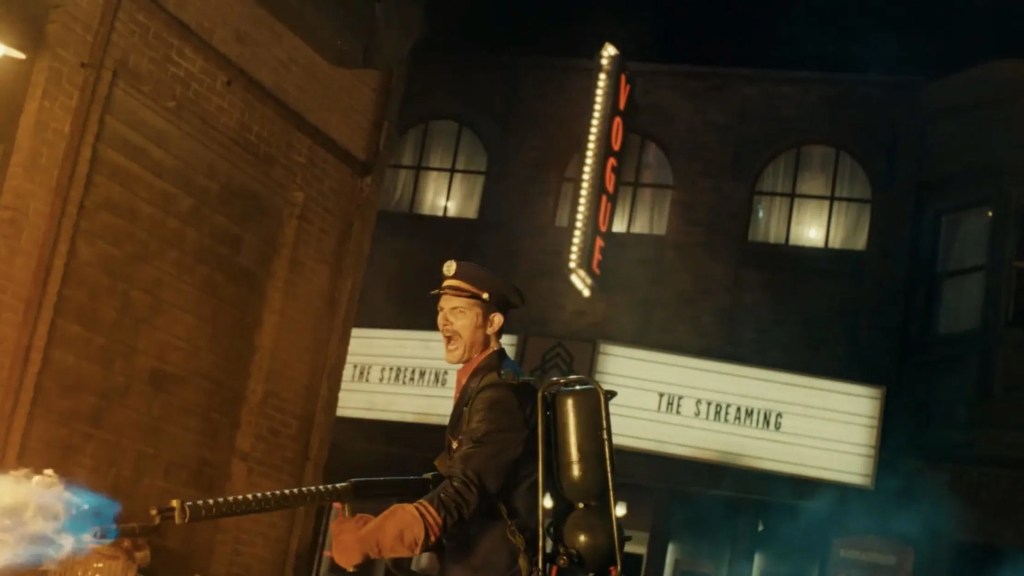
Years of this freeze frame character introduction, which has been memeified by this point, organically tells the audience how the lead got to this point, informing us that we are doing a quick time jump to set up the story and once the rules and structure has been set up it’ll just be a matter of time before we return to the present to see where the consequences of all this action has led us. Case in point we rejoin Hal, now an adult played by Theo James, 25 years post his decision to bury the monkey deep in a well with his twin after the gory death of his Uncle Chip who was trampled in a hunting trip accident. Hal is struggling in adulthood, with a teenage son who he tries to protect by only seeing him once a year. This all seems in vain as somehow the monkey has been unearthed in murky circumstances (communicated to us with the introduction of various new characters from present day) and has come back into Bill’s possession. Once again, the story reveals its secrets in flashback as voice over returns, but this time taking on Bill’s tenor and point of view who shares that having gone back down to get the monkey after it was buried now has the ability to take his revenge on his brother who he assumes is responsible for the death of their mother.

While never doing anything all that unique or creative, the basic narrative structure does what it needs to do for this very limited and straightforward story. Playing like an episode of Goosebumps for the grown up set with a splash of cursing and slight gore (there’s literally a poster of The Haunted Mask in Hal’s childhood bedroom), this would have been better suited as anthology collection of King’s short stories combined into one film rather than relying on the bones of an interesting tale to fill out 98 minutes of screentime.
A few other random notes:
- Why are the kills so goofy unfrightening? They land somewhere in no man’s land, not funny enough to be as enjoyable as the Final Destination series, and not scary enough to give you the thrill of horror.
- The budget certainly doesn’t help as so much is reliant upon CGI, in all honestly it feels more like an old school Stephen King TV movie-of-the week.
- Not only did The Monkey have to compete with Final Destination Bloodlines for the crown of silly killings at the movies but also had to content in 2025’s one-actor playing twins category where Theo Jones certainly does something, especially with the Bill character, but never holds a candle to Michael B. Jordan’s work in Sinners.
- I was honestly so excited to see both Tatiana Maslany and Sarah Levy pop up in the early parts of the film. If only their onscreen deaths were as exciting as the charm they displayed The Monkey would have been a smidge better. A+ to the casting director for the great cameos.
 The Director's Lens
Leave a comment